We’ll tell you what the wall needs
Consultation, application, and straight answers about what each finish will and will not do.
What we do
How we work
Consultation and material selection
We come to the room. We look at what is on the wall now, what is behind it, and what the light does through the day. You see samples in your own space rather than in a showroom, and you get a recommendation with the reasoning attached, including when the honest recommendation is the cheaper finish, or paint.
Application
Substrate assessment and preparation, then the finish in its proper number of coats with proper cure time between them, then sealing where the finish calls for it. We protect the rest of the house and we clean up after ourselves. Most projects run one to three weeks on site.
Aftercare
Written care instructions specific to your finish and your room, not a generic sheet. Answers when you have a question in year two. Touch-up work when you want it.
1 to 3 weeks on site
What happens, in order
Before we start, expect two to four weeks from your first call to your start date, depending on the season. The four stages below all happen inside the one-to-three-week window on site.
- 01
Assessment
We confirm what is under the existing surface. Moisture, movement, and old coatings all change the approach, and it is much better to find them now than halfway through.
- 02
Preparation
Repair, level, prime. On most walls this is the largest share of the job, and it is what decides how the finish looks in year five.
- 03
Application
Coats in sequence with real cure time between them. Lime sets the pace; microcement moves fastest. We will not compress a cure to hit a date.
- 04
Finish and handover
Sealing where applicable, a final pass, clean-up, and a walkthrough with care instructions specific to what is now on your wall.
No surprises
What changes the price and the timeline
The wall you already have
A sound, flat, primed wall is a fast job. A wall with failed plaster, damp, or six coats of old paint is not. We quote after we have seen it, not before.
Which finish
Lime needs the most cure time. Microcement needs the most preparation. Roman clay sits between the two.
Size and geometry
Corners, curves, niches, and cut-ins take disproportionately longer than flat run. A small complicated room can cost more than a large simple one.
Season
Humidity and temperature control cure time on lime and clay. A cold Boise winter genuinely slows the work, since lime will not cure below freezing, and rushing it shows up later.
What it costs
$10 to $65per sq ft, installed
Ranges cover material and labor for typical residential work. The existing condition of the wall moves the number more than anything else, which is why we quote after seeing it rather than over the phone.
Our pricing sits where this work normally sits in this market. We are not the cheap option, and we will not pretend the cheap option produces the same wall.
Questions
Before you call
How long will my project take?
One to three weeks on site for most rooms. Microcement is usually fastest and lime slowest, because lime needs real cure time between coats and we will not compress it.
Can you go over what is already on my walls?
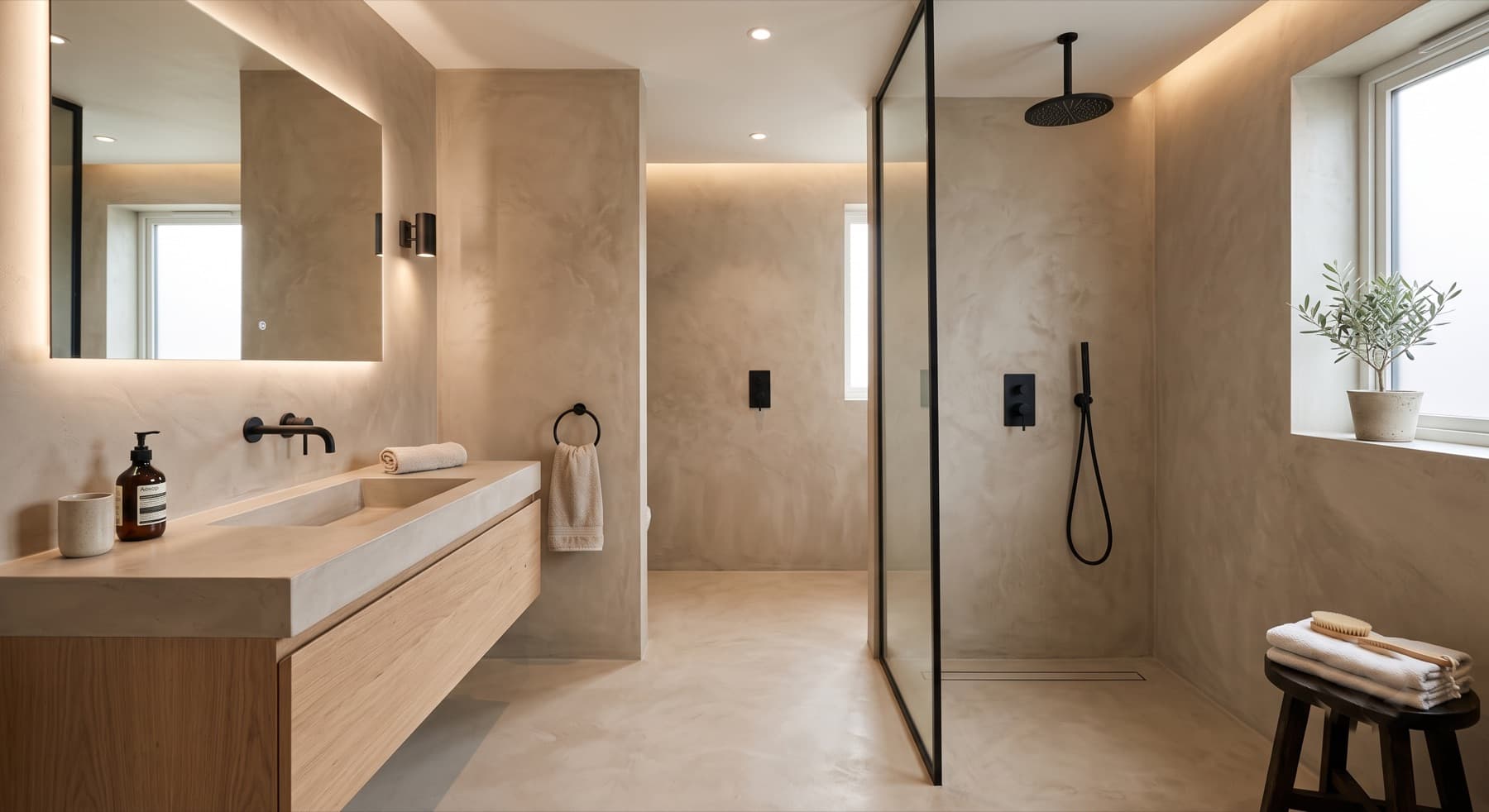
Usually yes. Over drywall, plaster, and most sound paint. Over tile too, in many cases, which is the main reason microcement is popular for bathroom renovations. What matters is whether the existing surface is sound and flat. We check that at the consultation and tell you what preparation it needs.
Which finish should I use in a bathroom?
Microcement. It is continuous, water-resistant, and has no grout to fail. Lime can work elsewhere in a bathroom, away from direct spray. Roman clay should not go in one.
Which finish should I use in a kitchen?
Microcement, for the same reasons plus heat and daily cleaning. If you specifically want the look of lime in a kitchen and you are at peace with it marking, we will do it. We will just make sure you have heard that first.
What does it cost?
In line with what this work costs in the Boise market. The existing condition of the wall moves the number more than anything else, which is why we quote after seeing it rather than over the phone.
Do you offer custom colors?
Yes. We mix our own, and we show samples on your wall in your light before anything is committed. The same color is a different thing in north light and south light.
How far ahead should I book?
Two to four weeks is typical from first call to start date. Spring and summer run busier.
What if something goes wrong?
If it is our application, we come back and fix it. The specifics are written into your contract rather than implied on a website.
Start with a conversation
Tell us the room and we will tell you the finish. Consultations are free and there is no obligation.